

If you’re on the hunt for your next adventure, very few destinations compare to Namibia. Located on the Atlantic coast of southwest Africa, this is a country that’s characterized by its expansive deserts, scenic coastal views, and cultural highlights.
One of the best ways to visit Namibia is as a digital nomad. There’s so much to see and do, so long-term travel is the way to go. And what better way to experience all of the sights than by road tripping cross-country?
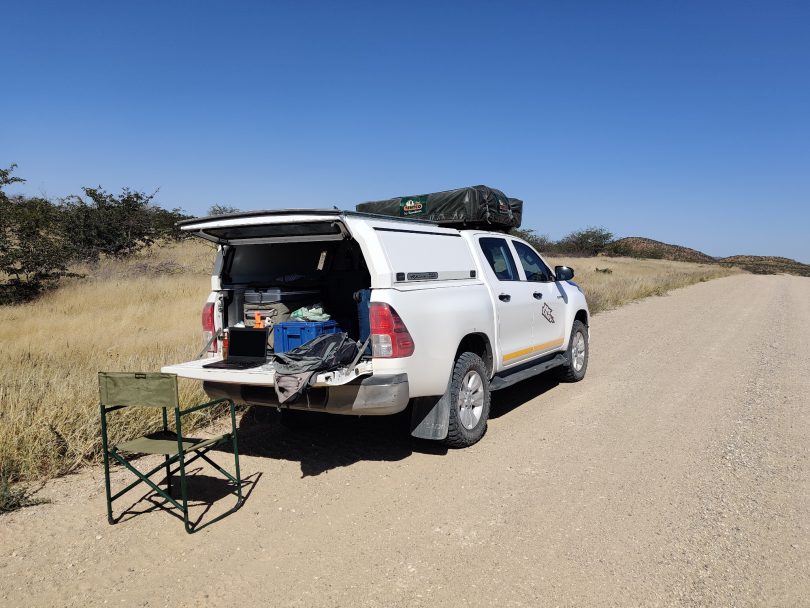
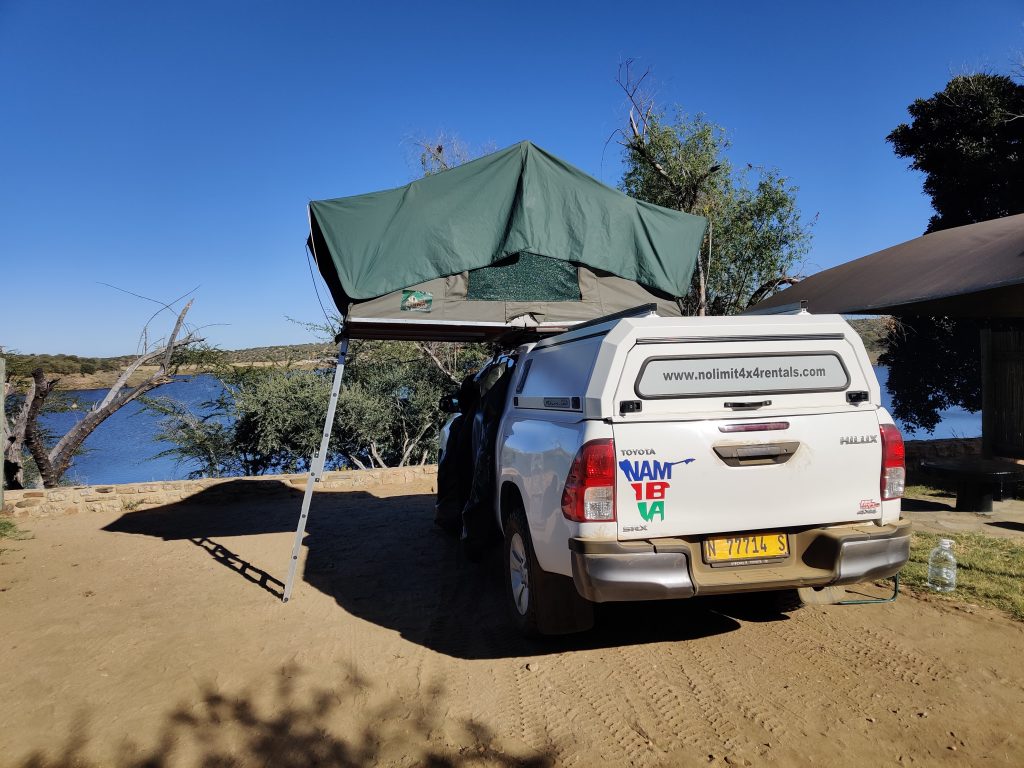
While it’s also more than possible to book domestic flights, my experience was so much better all thanks to my rented Toyota Hilux. I chose a Hilux with a rooftop tent for the chance to camp out under the stars and save some cash in the long run.
Want to know more about my road trip across this beautiful south African country? Keep reading to get my full itinerary recommendations as well as helpful nomad-friendly tips to follow along the way.
Quick Tips for a Namibia Road Trip:
- Road travel in Namibia is best, so renting a car is recommended. If you’re arriving in Namibia by plane, you can book your vehicle at the Hosea Kutako International Airport.
- A standard-sized car is fine, but keep in mind that many of the roads in Namibia are unpaved. For that reason, choose your rental vehicle wisely – especially if you’re not a fan of bumpy rides!
- Depending on your itinerary, petrol stations may be far and few between. To avoid low or no gas tank situations, you’ll definitely want to fill up whenever you get the chance.
- Keep a fair bit of cash on you at all times. In more remote areas of the country, you may not be able to pay with a credit card. You may not even have access to an ATM.
- WiFi is an important consideration for all digital nomads. Namibia isn’t well-known for having the greatest internet, so you’ll definitely want to plan ahead on that front. The main mobile telecommunications company in Namibia is MTC. Be sure to check MTC coverage before arriving at each destination if you plan on working remotely.
Now that we’ve covered some basic tips for digital nomad-ing your way through Namibia, let’s go through an exact itinerary. This will give you a better idea of all this country has to offer. While your trip may vary, here’s what mine looked like:
Windhoek→Etosha National Park→Outjo→Twyfelfontein→Cape Cross→Swakopmund→Sesriem/Sossusvlei→Windhoek
I started and ended the 2-week road trip in Windhoek, working 3 days and sightseeing 4 days per week, and there were plenty of highlights along the way. Feel free to drive this route in reverse order. Just know that using Windhoek as a starting and ending point is the most convenient.
Windhoek to Etosha National Park
The drive from the main airport to Windhoek is only about 40 minutes, so it’s a great place to start the journey. While there’s not that much to do here in terms of sightseeing, it’s a solid work hub. Feel free to settle in and work for a day or two before heading to your next destination.
Must Eat: Joe’s Beerhouse
One thing I do recommend doing while in Windhoek is eating at Joe’s Beerhouse. This is a tourist hotspot that serves cold beer, burgers, and everything in between. Just be sure to get a reservation; Joe’s is the place to be, even on weeknights.
From Windhoek, next up on the itinerary is Etosha National Park. I recommend starting your journey to Etosha early in the day – the drive is about 4 hours with no traffic. I did notice quite a few police officers along the way. Even though it’s a nicely paved road, you’ll want to avoid speeding.
Before you make it to the park, you’ll pass through a town called Outjo. This is your last chance to hit up a large supermarket and petrol station. Grab everything you need before entering the national park.
*Note: Visitors are allowed to bring uncooked meat into the Etosha, but everything must be cooked or better yet, eaten, on the way out.
About My Time in Etosha
Most people assume that a national park won’t have much going for it in terms of the internet, but I found that the 4G connection was solid in Etosha. So if you want to split your time between working and exploring, you’ll have the opportunity to do so.
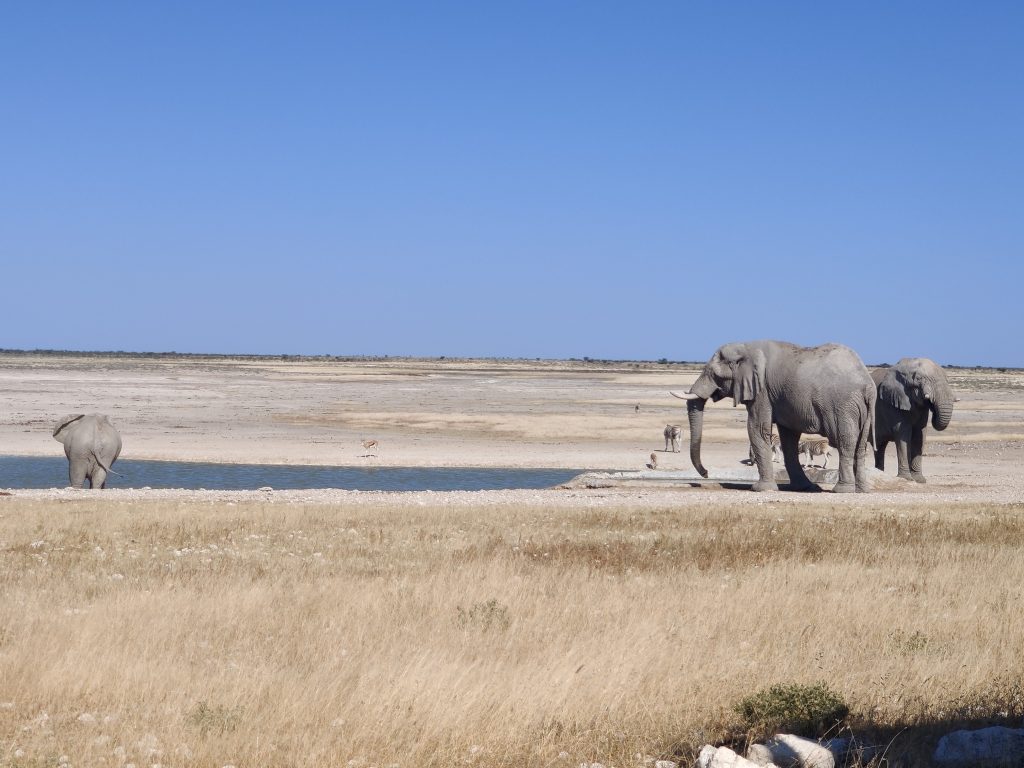
It’s best to go exploring in the morning, settle in for a few hours of work around lunchtime, then head back out for a late afternoon drive. Once dinner time hits, I highly recommend visiting the nearest waterhole. This will give you the chance to have the animals to come to you for a change.
More Tips for a Quick Trip to Etosha:
- If you’re spending just 1 day in the park, stay at Okaukuejo Camp. For a 2-day trip, I recommend staying at Halali Camp for your second night.
- For 3+ days, you might want to check out the far east region of the park as well like Namutoni Camp.
- Book your accommodation at least 2-3 days ahead of time (1 week is best) to confirm your place to stay. The camps are large, but they do fill up fast!
- Each camp mentioned here has all you need to kick back and relax. That includes a restaurant, swimming pool, small convenience store, petrol station, and of course, a waterhole complete with nighttime lighting.
- It’s possible to pay for WiFi at your accommodations, but this is an expensive way to access the internet. It’s best to have your own SIM card and utilize an unlimited data plan.
- If you’re interested in a Game Drive (aka a wildlife safari) it’s best to book it in the morning. This is when the park’s wildlife is most abundant, and you’ll see a lot more earlier in the day compared to the afternoon or evening.
Etosha to Outjo (Optional Work Stop)
Getting work done in the park isn’t ideal for everyone. If you prefer to work elsewhere, your best option is to visit Outjo, the small city just south of Etosha. You’ll find decent 4G here, and if you choose to stay, book a night or 2 at Ijaba Lodge.
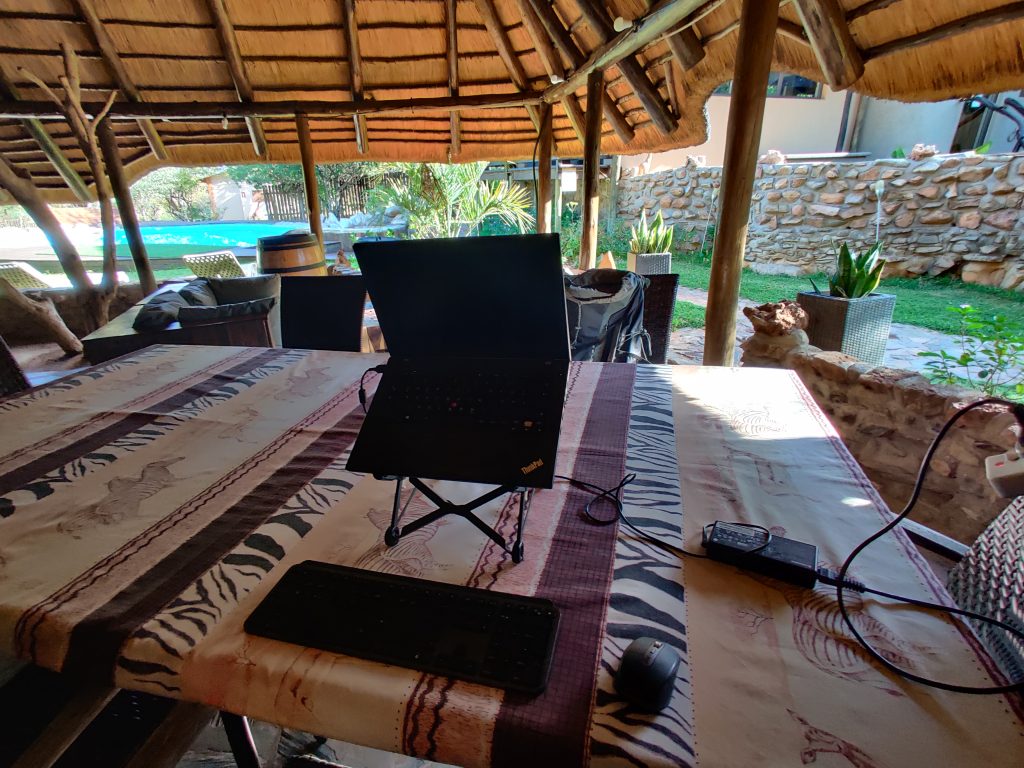
Ijaba has a cozy covered outside area that’s perfect for working. The staff is wonderful, and there’s a great pool as well as onsite activities like bird watching, guided walks, and game viewing.
Etosha/Outjo to Twyfelfontein
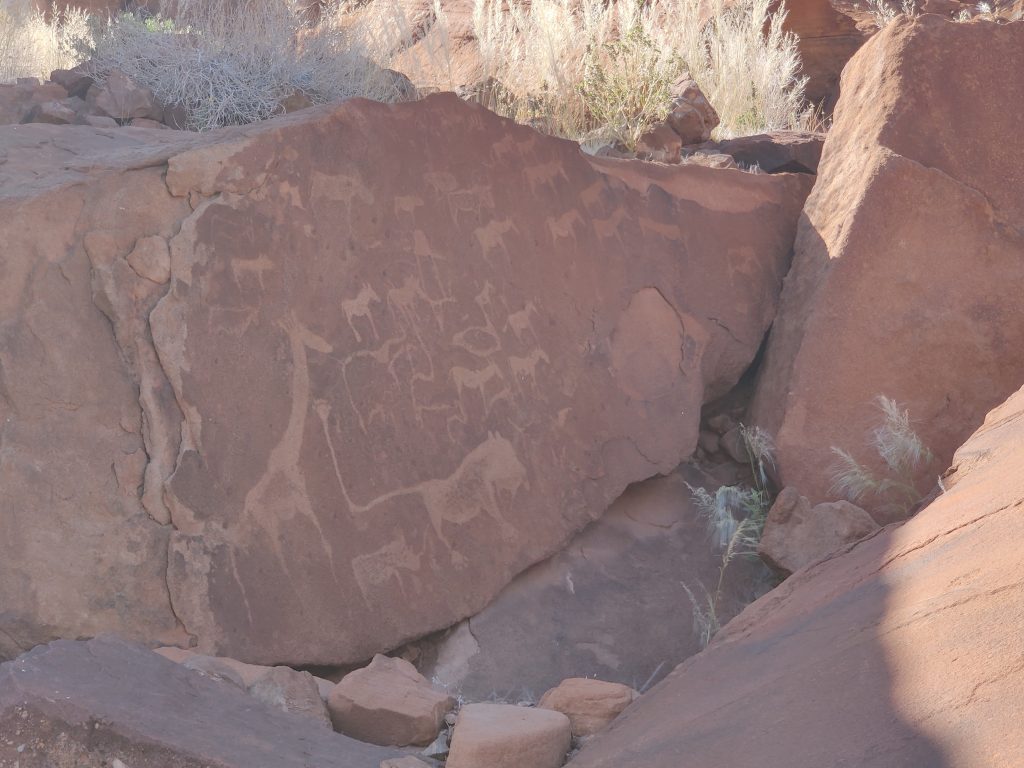
Next up on the itinerary is Twyfelfontein, one of the most well-known natural attractions in all of Namibia. This is the site of ancient rock engravings that has a strong history of Stone age hunter-gatherers. Needless to say, it’s a must-visit spot during your time here.
The drive from Etosha or Outjo (depending on where you’re departing from) is anywhere between 3 to 5 hours. That means you’ll want to head out early in the day, especially if you choose to make a detour through Kamanjab to visit one of the Himba villages.
I highly recommend making this detour; the Himba tribe is indigenous to northern Namibia, and the culture here is extremely interesting. If you’ve got the time and don’t mind adding an hour or so to your drive, you’ll definitely want to check this out!
While you’re in Kananjab, stop for groceries, petrol, and cash, then make your way to Twyfelfontein. You can sign up for a tour the day you arrive, or just chill for the evening and start your sightseeing the following morning. A guided tour is about an hour, and it will give you a deep insight into the ancient rock paintings and carvings.
Accommodation Options in Twyfelfontein
There are quite a few options for accommodation in and around Twyfelfontein, ranging from basic campsites to fancier lodges.
The budget-friendly Twyfelfonteain Campsite is a great choice, but if you want something with lots of amenities and stunning views, check out Mowani Mountain Camp. Mowani has its own onsite restaurant and swimming pool, and the suites even come with complete butler service.
Unfortunately, the resort-style bungalows here aren’t in every traveler’s budget. If that’s the case for you, Mowani Camp offers 7 campsites that I personally loved, not only for their affordability but for the natural beauty as well.
Twyfelfontein to Cape Cross
Next up on the itinerary is Cape Cross, which is about a 4-5 hour drive from Twyfelfontain. Cape Cross is located on Namibia’s Skeleton Coast. To get here, you’ll get to drive through the desert past Brandberg Mountain (also called “The Brandberg”), the highest peak in the country.
If you choose to stop at The Brandberg, check out the famous White Lady. This is an ancient rock painting located deep within the mountain. Just keep in mind that this stop will add about 1 hour of time to your road trip, plus about 2 hours of hiking to get to the painting.
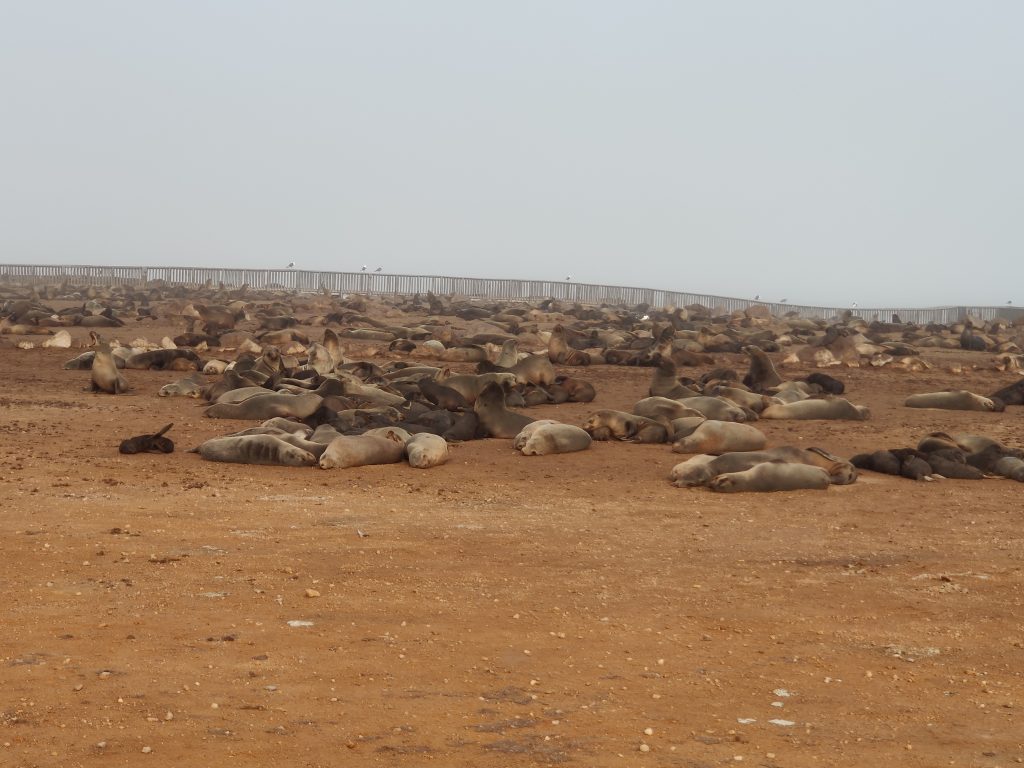
Once you arrive at Cape Cross, brace yourself for the enormous population of seals inhabiting the area. Cape Cross is known best for its massive Seal Reserve – don’t be surprised if you smell them before you actually spot them!
After that, I highly recommend making your way to Cape Cross Lodge if you choose to stay the night here. Another option is to make the 1.5-hour drive to Swakopmund, the next destination on the itinerary.
Cape Cross to Swakopmund
About halfway between Cape Cross and Swakopmund, you’ll come to Hentiesbaai (also called Henties Bay by tourists). The best thing to do here is to visit the Zeila Shipwreck, which juts out above the water and can be seen clearly from shore.
Because the drive from Cape Cross to Swakopmund isn’t too long compared to other days on this road trip, you may also want to make a stop in Spitzkoppe. This will add another 2-3 hours to the drive, but it’s well worth it if you like hiking, camping, and gorgeous landscapes.
If you do choose to stop here, I recommend staying the night and moving on to Swakopmund the following day. Another option is to make a day trip to Spitzkoppe from Swakopmund, but that’s entirely up to you.
About My Time in Swakopmund
Swakopmund was one of the main highlights of all my time in Namibia, both for working and sightseeing. This is the perfect place for a work stop, mostly because of the strong WiFi and mobile connectivity – something that every digital nomad hopes for!
But having the ability to work wasn’t the only thing I loved about my time in Swakopmund. There are loads of activities to choose from, ranging from surfing and biking to skydiving and eating local cuisine.
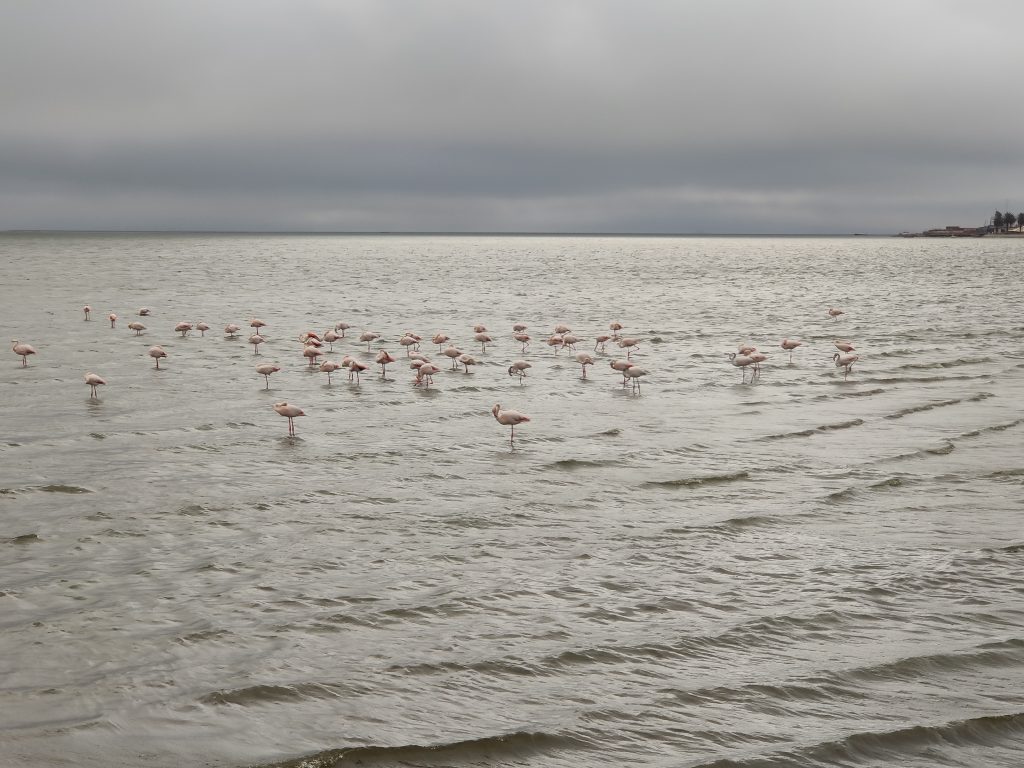
You’ll 100% want to visit the pink salt lakes and pelican population in Walvis Bay, or surf on one of the longest beach waves along this coast. This area is a surfer’s paradise, so you could potentially stay for weeks alternating between work and surf.
Swakopmund to Sesriem/Sossusvlei
After my time in Swakopmund, I spent a good bit of time driving to Sesriem, the entry point into Sossusvlei. This drive takes 5 to 6 hours, but it’s entirely worth it, especially if you want to wrap up your trip with views of sand dunes and desert trees.
Because it’s such a long drive, it’s best to book a night – or better yet, two – before wrapping things up in Windhoek. There are a number of accommodations available, but the best is Sesriem Campsite or Sossus Dune Lodge.
I personally loved Sesriem Campsite because of its close location to the inner gate of Sossusvlei. By staying here, you’ll be one of the first visitors to reach Sossusvlei in the morning, and you might even get the chance to see the sunrise without the annoyance of crowds.
About Sossusvlei
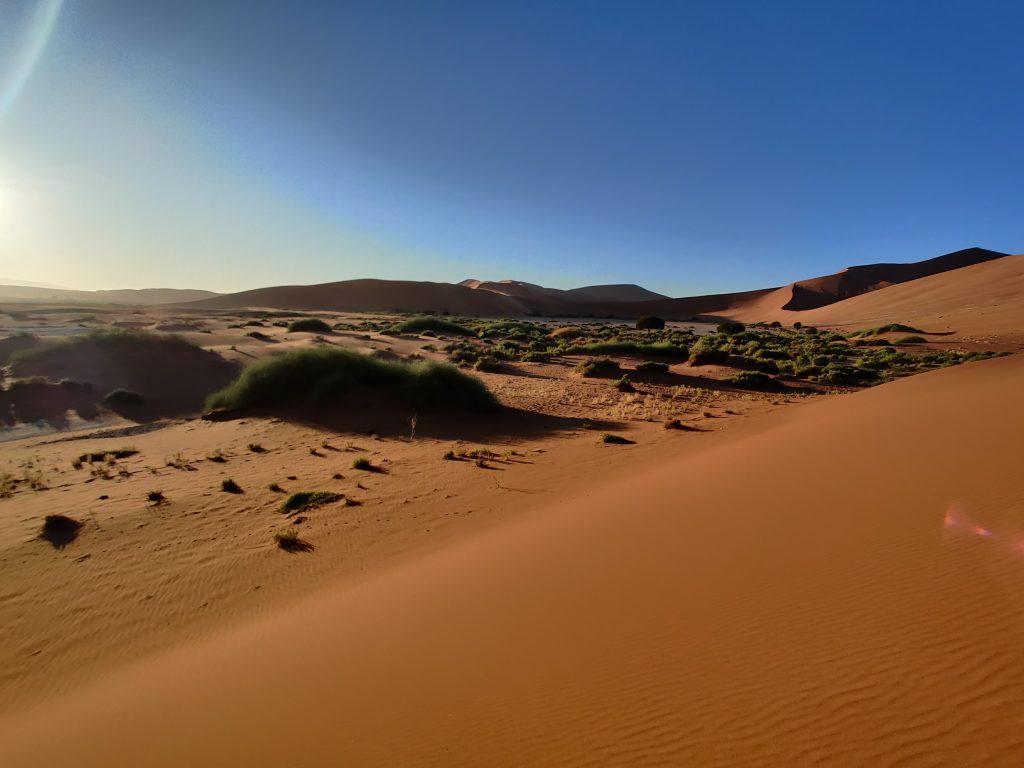
Sossusvlei is arguably the most spectacular, most well-known attraction in all of Namibia. It’s situated in the largest conservation area in Africa (the Namib-Naukluft National Park) and is characterized by the massive red dunes that surround it.
These dunes are some of the highest in the world, and some of them reach almost 400 meters. Whether you visit the dunes for sunrise, sunset, or somewhere in between, Sossusvlei is a place you won’t want to miss out on.
Because there are so many things to do and see surrounding Sossuvlei – Sesriem Canyon, Dune 45, Hiddenvlei, Big Daddy, Deadvlei, etc. – it’s worth staying 2 nights in either Sossuvlei or Sesriem.
Sesriem to Windhoek
On the last driving day of your itinerary, plan on spending 5 to 6 hours on the road back to Windhoek.
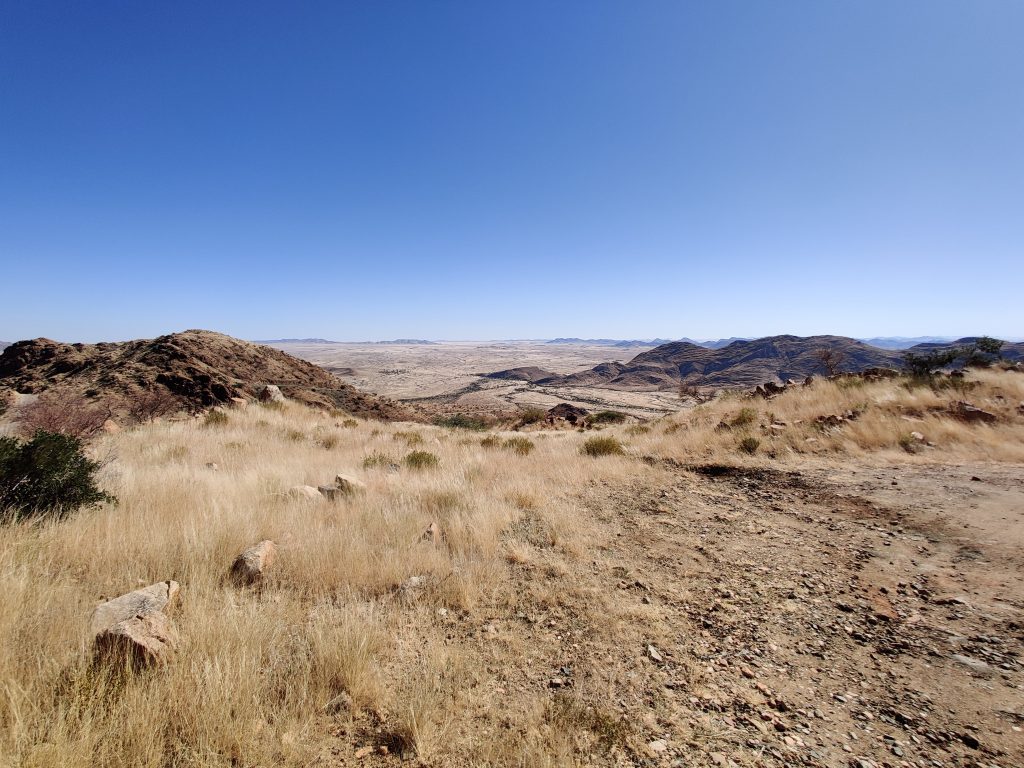
For the best views, I recommend planning your route through Spreetshoogte Pass, a mountain pass that connects the Namib Desert with the Khomas Highland. It’s quite steep, so if you’re not comfortable driving on a narrow steep road, you may want to skip this. But if not, the views will take your breath away and end your road trip on an amazing note.
Once you arrive back in Windhoek, you can either chill out and recuperate or work for a few days or depart Namibia from the international airport.
Still Looking for More to Do in Namibia?
If you have more time or just can’t bear to leave this beautiful country, you can extend your itinerary with 2 optional detours.
After Twyfelfontein, you can add another 2 or 3 days exploring the north around Sesfontein. This is the ideal place to spot desert elephants, so if you’re a fan of wildlife, definitely consider making this add-on.
Another option is to explore the south and spend time in Quivertree Forest, Fish River Canyon, and Lüderitz. The Quiver Tree Forest (or Kokerboom Woud) is situated next to Keetmanshoop, a great place to unwind overnight.
Fish River Canyon is located in the largest canyon in the continent – AKA the Grand Canyon of Africa. Lüderitz is known for its interesting architecture as well as expansive wildlife. Depending on your stops in the south, this would add another 2 to 4 days to the itinerary.
No matter how you choose to plan your itinerary, you won’t regret visiting Namibia as a digital nomad. It’s the perfect destination for work and play, so don’t be surprised if you never want to leave!